


This salsa is all about balance. The roasted tomatillos bring a bright acidity that softens as they cook, which gives the base a clean tang without any sharp edges. The serranos add a steady heat that stays present but never overwhelms the other flavors. The poblano brings a deeper roasted note that rounds everything out and gives the salsa a slow, warm finish. The garlic turns sweet on the comal and blends in without taking over, and the cilantro lifts the whole thing with a fresh, green note. Everything works together in a way that feels layered but still simple, with a balance of smoke, heat, and brightness that makes it easy to pair with almost anything.
Why This Salsa Works
Roasting is what gives this salsa its personality. Tomatillos mellow and sweeten as they blister. Serranos soften and become more aromatic. Garlic turns from sharp to caramelized. The poblano develops a smoky depth that ties everything together. When you blend these ingredients, you get a salsa that tastes complex without being heavy.
The texture is another part of what makes this salsa special. Roasted tomatillos break down into a silky base. The poblano adds body. The serranos keep the heat consistent. The cilantro adds a fresh finish. You can blend it smooth or leave it a little chunky. Either way, the salsa has enough structure to cling to chips and enough brightness to cut through rich dishes.
Roasting the Tomatillos, Serranos, and Garlic
A comal is ideal for roasting because it gives you even heat and a dry surface. (If you don't have a comal yet, make sure you check out our comal guide) Tomatillos release a lot of juice as they cook, and those juices can stick and burn. Lining the comal with foil gives you the same blistered, softened vegetables without the stubborn cleanup. The tomatillos should soften and darken in spots. The serranos should blister and shrivel up a bit. The garlic should turn golden and smell sweet.
Roasting the Poblano
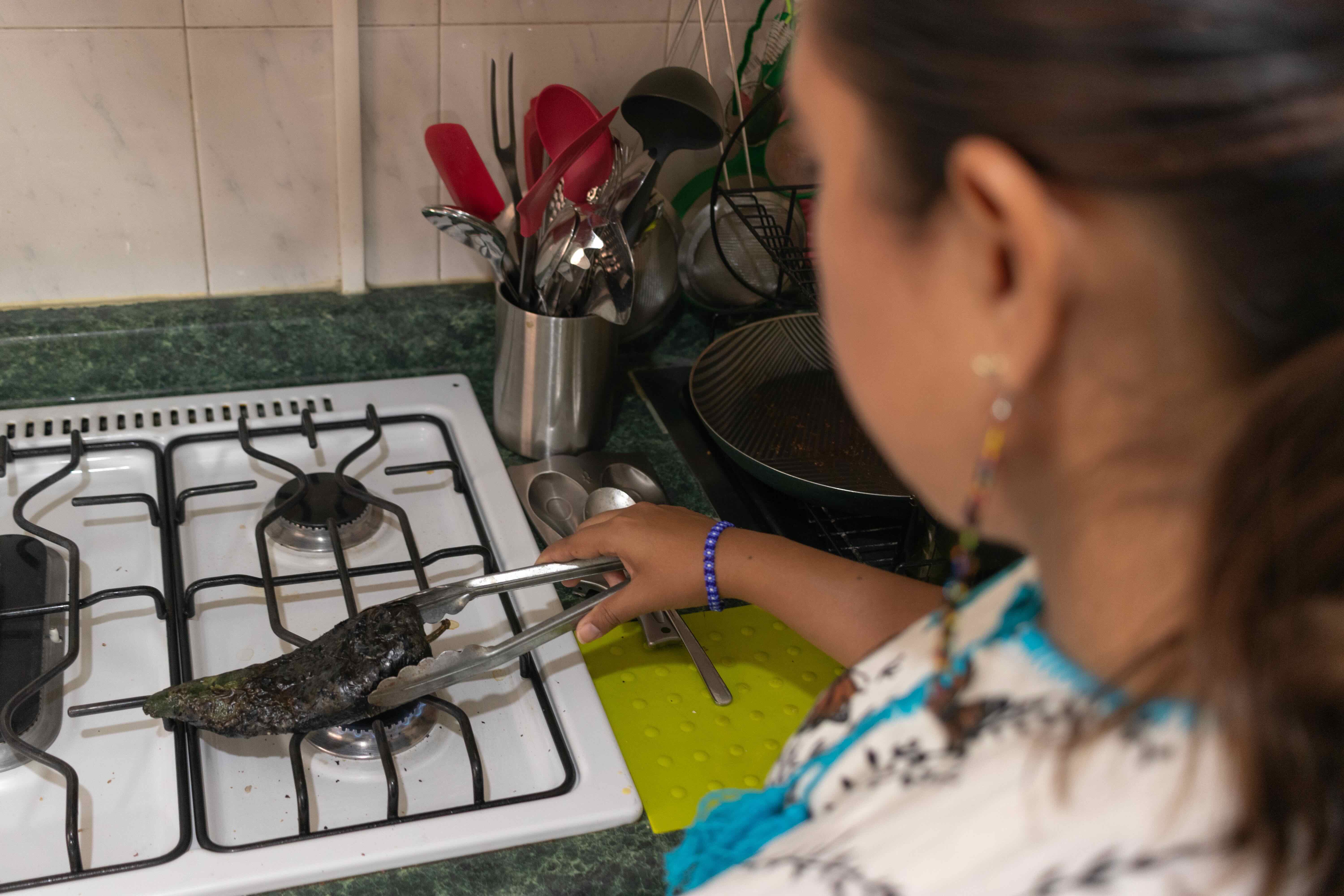
The poblano is best roasted directly over a gas flame. Balance your poblano on the grates of your stove. Using some tongs, rotate it every so often until the skin blisters and turns black on all sides. The goal is an even char, not burning it through. Once it’s charred, place it in a bowl and cover it with tin foil or cling wrap so the steam loosens the skin. After five minutes, peel off the skin using the back of a knife, remove the seeds, and roughly chop the flesh.
If you don’t have a gas stove, you can roast the poblano on a comal or under the broiler. Turn it occasionally so it chars evenly. The char won't be as even, but it will still be delicious.
Balancing Heat and Flavor
Serranos are the main source of heat in this salsa. They bring a clean, bright spice that blends well with tomatillos. Poblanos do not add heat. They add depth and aroma. If you want a spicier salsa, add an extra serrano. If you want something milder, remove the seeds or use fewer chiles. Adjusting the poblano will not change the heat level, so focus on the serranos when you want to tweak the spice.
Blending and Texture
Once everything is roasted, softened, and peeled, blend the ingredients with a little salt. You can add a splash of water if the salsa is too thick. Blend until you reach the texture you like. A smooth blend gives you a silky salsa that works well with tacos and grilled meats. A looser, chunkier blend gives you more texture and makes the salsa feel rustic.
Cilantro should be added at the end. It keeps the flavor bright and fresh. You can blend it in or chop it and stir it through. Both approaches work.
How to Use This Salsa
This salsa is versatile. It works with tacos, grilled chicken, carne asada, roasted vegetables, quesadillas, and breakfast dishes. It’s great with eggs, especially when you want something bright to cut through richness. Try it spooned over our Tacos de Papa! It also makes a good base for chilaquiles. The smoky poblano and roasted tomatillos give the chips a deeper flavor than a raw salsa ever could.
It also works well as a snacking salsa. The texture is thick, and the flavor is addictive and balanced enough that people keep going back for more.
Making It in a Molcajete
A blender gives you a smooth, reliable salsa, but making this one in a molcajete is a whole different experience. The texture is perfectly rustic and a little chunky, and the flavors feel more grounded because the roasted ingredients break down slowly against the stone. It’s a fun option if you want something with more character or if you’re already using your comal and want to keep the process traditional. If you’re curious about choosing a molcajete, we have several suggestions in The Essential Tools Every Mexican Kitchen Needs.
The order matters. Start by grinding the garlic and salt into a paste. This gives you a base that helps the rest of the ingredients break down more easily. Add the roasted serranos next and work them in until they release their juices. The heat spreads evenly this way. Add the chopped roasted poblano and crush it lightly so it blends without losing all its texture. The tomatillos go in last. They’re soft from roasting, so they break down quickly and create the body of the salsa. Stir in the cilantro at the end so it stays bright and fresh.
The whole process takes a few minutes, and the result is a salsa with a deeper aroma and a more interesting texture than anything you get from a blender. It feels handmade in the best way.


